COMMENTARY

The Seller’s Last Question: What Happens to the Employees?

Reference code: C26-05 La-Z-Boy, Foreign Competition, and the Succession-Planning Case for a CCE When the owner of a successful manufacturing company begins planning for succession, the discussion quickly acquires its own vocabulary. The advisers speak of valuation, financing, taxes...

Artificial intelligence tools were used for literature identification, organizational assistance, drafting support, and editorial revision. All substantive arguments, institutional designs, legal analysis, and conclusions are the work of the author. The author reviewed and verified all sources and citations.

Polycentric Governance Augmented by Worker Input

Reference code: C25-18 Polycentric Governance and Worker Input as Downturn Resilience A CCE is structurally positioned to weather economic stress better than a conventional firm, not because it is insulated from markets, but because its governance is designed to gather better information, make...

Paying Down the First Deal: The First CCE Uses Old-Fashioned Seller Financing

Reference code: C25-17 Only the first CCE typically faces the financing problem in its hardest form, because it starts with no money and no collateral. In practice, there are three commercially realistic ways to finance that first acquisition, listed here in descending order of practical viability...

Polycentric Governance Tends to Outperform Traditional Capitalist Governance

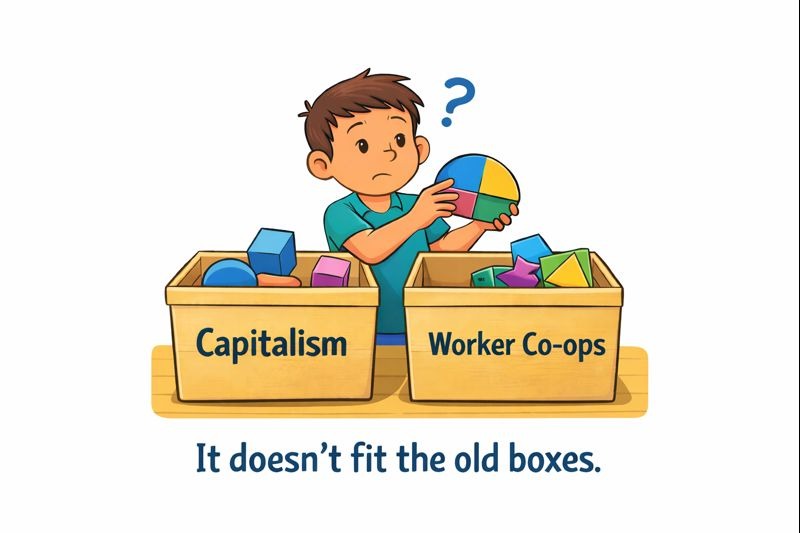
Reference code: C25-16 The Concentrated-Power Problem in Traditional Capitalism In a conventional capitalist firm, economic authority tends to collapse into a single dominant center even when the org chart looks more complex. Shareholders (or the capital markets that discipline them) set the value...

How Reserves and Funds Protect Workers in a Downturn

Reference code: C25-15 This commentary is one of a two-part set of commentaries that examines  worker precarity in down economies. What “Reserves and Funds” Mean in Practice Reserves and internal funds reduce precarity only when they operate as pre-positioned commitments rather than...

Durable Worker Security in Economic Downturns

Reference code: C25-14 This commentary is one of a two-part set of commentaries that examines worker precarity in down economies. Why Downturns Turn Jobs into Precarity Economic downturns translate quickly into worker precarity because the employment relationship in the United States is often the...

The Problem of Captured Surplus

Why A Commons-Based Enterprise Model Is Needed Now Reference code: C25-13 Historical Drift of the Postwar Social Contract In the decades after the Second World War, households in the United States could reasonably expect that diligent work would translate into stability, modest upward mobility and...